Neuropathy affects an estimated 20 million people in the United States.1 Depending on the severity and symptoms, neuropathy can quickly alter an individual’s quality of life. Suddenly, their daily activities and hobbies can feel exceedingly difficult or plain exhausting. The onset of neuropathy also increases the risk of complications like burns, infection, and falls.2
This article will cover what neuropathy is, what causes it, and what you can do to treat it—including exercises for neuropathy. Keep reading to learn more.
What is neuropathy?
Neuropathy, often referred to as peripheral neuropathy, is a condition that causes damage to the nerves outside the brain and spinal system (peripheral nerves in your organs, muscles, skin, etc.).
Peripheral nerves transmit signals between the brain and spinal cord and the rest of your body, creating a communication highway for every essential function the body carries out. When these signals are disrupted or damaged, it can cause symptoms like pain, numbness, tingling, burning, and sensitivity to touch—particularly of the hands and feet.
What causes neuropathy?
There are a variety of conditions that can cause neuropathy, including:
- Diabetes – One of the most common causes of neuropathy, diabetes damages nerves by damaging the small blood vessels that feed them due to uncontrolled blood sugar levels.
- Alcoholism – Alcohol can have toxic effects on nerve cells, and long-term chronic alcohol consumption often results in damage to peripheral nerves.
- Medications – Certain medications such as chemotherapy drugs or antibiotics may cause nerve damage, leading to neuropathy.
- Vitamin B12 Deficiency – Vitamin B12 is essential for nerve health, and a deficiency can lead to neuropathic symptoms.
- Trauma – Injuries like car accidents or falls can cause direct harm to peripheral nerves, resulting in neuropathy.
- Autoimmune diseases – These include Sjogren’s syndrome, lupus, rheumatoid arthritis, Guillain-Barre syndrome, chronic inflammatory demyelinating polyneuropathy, and vasculitis.
- Infections – These include certain viral or bacterial infections, including Lyme disease, shingles, Epstein-Barr virus, hepatitis B and C, leprosy, diphtheria, and HIV.
- Inherited disorders – Disorders such as Charcot-Marie-Tooth disease are hereditary types of neuropathies.
- Tumors – Both malignant and benign growths can appear on local nerves or compress nearby nerves.
- Poison exposure – Hazardous chemicals and heavy metals, such as lead and mercury, are typical examples of toxic substances that can damage nerves.
- Other diseases – These include bone marrow disorders, kidney disease, liver disease, connective tissue disorders, and an underactive thyroid (hypothyroidism).2
Top exercises for neuropathy

Exercise has a positive impact on patients suffering from neuropathy. Research shows that regular exercise can help moderately improve muscle strength, reduce chronic pain, and better control blood sugar levels.3 4 Additionally, a personalized routine designed by a physical therapist has been correlated to better long-term neuropathy management.
This section includes a variety of 12 exercises with instructions you can try right now.
General aerobic exercise
Aerobic exercises improve overall health and enhance blood flow to affected nerves and limbs. Examples include:
- Cycling (recumbent or upright)
- Swimming (laps or aerobics classes)
- Walking
Targeted strengthening exercises
Strength training with body weight, light weights, or resistance bands can help strengthen muscles in the hands and feet—regions most affected by neuropathy. Try these:
- Seated ankle pumps – Keeping your heels on the ground, lift your toes off the ground as you bend the ankles. Then, reverse the direction as you straighten your ankle and lift the heel off the ground. Repeat as you alternate 10 times, for up to 3 total sets.
- Seated ankle resistance – Grab a resistance band and place it under the ball of the foot. Then push into the band as you straighten your toes (as you would to push a gas pedal when driving). Return slowly to the starting position and repeat 10 to 15 times for 2 to 3 sets. You can progress to other directions of the ankle depending on how you position the band (i.e., pulling the toe up, pushing inward, and pushing outward).
- Standing heel raises – Stand near a chair or table, then slowly lift the heels up off the ground. Lift as high as you can while maintaining good form, then return slowly to the starting position and repeat. Repeat 10 times for 2 to 3 sets. You can progress to a single-leg heel raise when you feel ready.
- Ball squeeze – For the hands, squeeze a soft ball or stress ball for 5 seconds. Release and repeat 10 times throughout the day. You can progress to a harder ball if needed.
Stretching the lower body
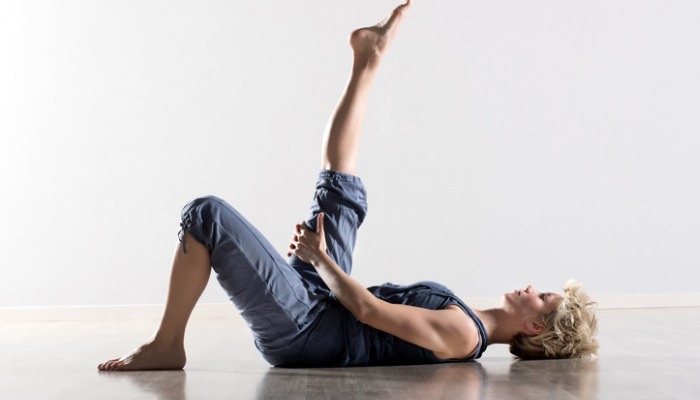
Regular stretching can reduce stiffness and improve flexibility. Plus, it promotes blood flow, potentially reducing nerve sensations and chronic pain. Try these stretches:
- Standing calf stretch – Stand a few feet away from a wall. Place your hands on the wall for balance, then extend one leg back with the heel flat on the floor. Lean into the wall, keeping your back heel down for a deep stretch. Hold this position for 30 or more seconds, then switch sides and repeat.
- Hamstring stretch (lying down) – Lie on your back, then extend one leg up with the knee straight. Gently pull the back of your thigh toward your chest until you feel a stretch in the back of your leg. Hold this position for 30 or more seconds, then switch sides and repeat for 3 total sets.
- Seated butterfly stretch – Sit with the bottom of your feet touching each other, then press your knees down toward the floor. You can bring your feet toward your groin for a deeper stretch, too. Hold for 30+ seconds for a few sets.
- Supine chest stretch – Lie on your back with your arms relaxed on the ground. If flexibility allows, bend your elbows and touch your forearms/hands to the ground up overhead in a “touchdown” position—you should feel a strong chest stretch. Relax, breathe, and hold for 30 or more seconds.
- Yoga poses are also a great way to combine stretching and strengthening exercises. You can try beginner poses like the cat/camel, child’s pose, and downward dog- just be sure to keep the range of motion comfortable.
Balance exercises
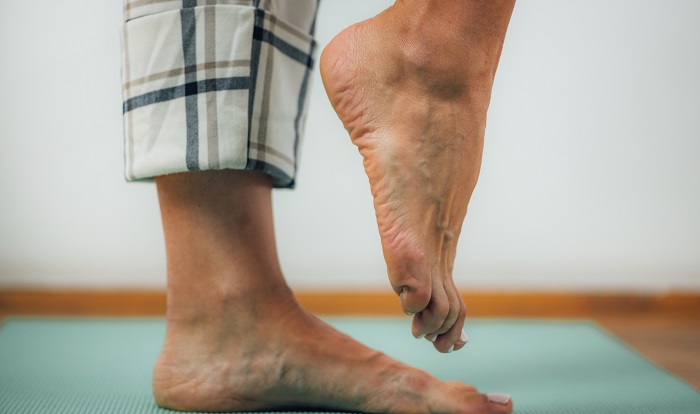
Balance exercises can help with coordination and reduce fall risks. Always make sure you practice these in a safe location (near a sturdy chair or countertop) to prevent injury.5
- Single leg stance: Stand on one leg with your knee slightly bent. Hold this position for up to 30 seconds and repeat 3-5 times each leg. You can progress to standing on a pillow or foam pad for increased difficulty.
- Heel-toe walking: Walk in a straight line, alternating heel, and toe with each step. This requires coordinated movement from the hips, trunk, and legs to maintain good posture and balance.
- Standing up from a chair: Stand up from a chair without using your hands for support. This activity encourages core strength and balance as you stand up repeatedly. Repeat 10 times for 2 to 3 sets at a safe but challenging speed.
- Side-stepping: Stand with your feet hip-width apart and arms out to the sides. Step to one side, then return to the center. Move to the other side and repeat. To progress, you can step onto a foam pad or add a loop resistance band around your legs.
For the best exercise results, talk to a physical therapist
These are just some of the exercises you can try for neuropathy. You should consult a physical therapist to determine which exercises best suit your symptoms and fitness level. Doing so can help you safely strengthen muscles and reduce your discomfort. Additionally, they can provide advice on other lifestyle changes that may help manage your neuropathy such as improved sleep and stress relief.
Other treatments for neuropathy
If you are experiencing neuropathy, it’s always best to talk to your doctor. They can help you determine the cause of it and recommend appropriate treatments. Other than exercise, here are other options to consider:
- Manage the underlying cause – For example, treat an infection, start a vitamin B supplement, manage blood sugar levels, etc.
- Prescription medication – There are a wide variety of options that your doctor may recommend, including steroids, pain relievers, and immunosuppressants. They can also prescribe medication to manage any side effects of neuropathy, such as erectile dysfunction, constipation, and depression.
- Alternative treatments – There are great holistic options too that you can try with little risk, including acupuncture, supplements, and herbal medicine.6
Key takeaways
Neuropathy can be frustrating, but there are ways to manage symptoms and reduce pain. You can take charge of your neuropathy with the right combination of exercise, lifestyle modifications, and other treatments. Talk to your physician and physical therapist today to develop a tailored treatment plan.
 About JayDee Vykoukal
JayDee Vykoukal is a writer, blogger, Doctor of Physical Therapy, travel enthusiast, and mom of two girls. She is passionate about helping others live their best life via a healthy lifestyle.
Sources:
1. “Peripheral Neuropathy.” National Institutes of Health (NIH). Ninds.nih.gov.
2. “Peripheral Neuropathy.” Mayo Foundation for Medical Education and Research (MFMER) Mayoclinic.org.
3. Dobson, J.L., J. McMillan, & L. Li. “Benefits of exercise intervention in reducing neuropathic pain.” Frontiers in Cellular Neuroscience 8 (2014).
4. Derouich, M., & A. Boutayeb. “The effect of physical exercise on the dynamics of glucose and insulin.” Journal of Biomechanics 35, no. 7 (2002): 911-917.
5. Ites, K.I., E.J. Anderson, et al. “Balance Interventions for Diabetic Peripheral Neuropathy: A Systematic Review.” Journal of Geriatric Physical Therapy 34, no. 3 (2011): 109-116.
6. “Treatment: Peripheral Neuropathy.” Crown. NHS.uk.