Gout is a common inflammatory disease that affects almost 4% of the US population. It’s marked by pain, swelling, and joint immobility.1 Fortunately, though, there are several methods of gout treatment, including dietary supplements.
Keep reading to learn about gout including how supplements can help and the best ones for this issue.
What causes gout?
Gout is a type of arthritis. Typically, people with gout only experience symptoms during a flare-up. A flare-up is typically characterized by pain, inflammation, redness, swelling, and/or stiffness in the joints, tendons, or kidneys. Most often, however, the big toe joint is affected.2
Gout is caused by a build-up of uric acid in the body. Uric acid is a product of the breakdown of purines, substances mostly found in animal-based foods. Purines are also found in alcohol and some beverages sweetened with high fructose corn syrup (like soda).
When uric acid levels are too high in your body, you may get gout. However, high uric acid levels don’t always result in gout.3
When gout is present, small, needle-like structures made up of uric acid form in and around a joint. If left untreated, gout can lead to tophi, a condition in which uric acid crystals form in other areas of the body, including in the skin.2
Anyone can get gout, but it mostly occurs in middle-aged men. In women, gout tends to develop after menopause. Getting gout in younger years is rare but possible.
Other factors may increase your risk of developing gout, including:
- Obesity
- Certain health conditions (congestive heart failure, hypertension, metabolic syndrome, diabetes, chronic kidney disease)
- Certain medications
- Alcohol use
- A high-fructose diet
- A high purine diet3
It’s important to have gout diagnosed by a qualified healthcare provider who can walk you through your treatment options. A healthcare provider can also answer your questions about supplements for gout.
Can supplements help with gout?

There is some evidence that certain supplements may help with gout.
Although research is still ongoing, it’s thought that some supplements may reduce levels of uric acid in the body. Other supplements may help alleviate pain, inflammation, and other symptoms of gout.4
Of course, dietary supplements should never replace standard medicine or care for any health condition, including gout. As much as we wish it were true, supplements will never be a cure-all for any ailment. This means that supplements should only be used as a complementary treatment for gout.
If you decide to use supplements for gout, it’s best to meet with a healthcare provider to discuss any possible side effects or precautions. Some supplements may interact with the medications you take, so be sure to disclose this information in your discussion.
What are the best supplements for gout?
Numerous supplements on the market may (or may not) treat gout. However, you can’t believe everything you see or read, which is why it’s important to look at the research when thinking about taking any new supplement.
While many supplements are marketed for gout, some seem to work better than others. Be sure to meet with a healthcare provider before trying any of the following (or other) supplements for gout.
The science behind 7 of the best gout supplements is outlined below.
-
Vitamin C
Vitamin C does more than just prevent scurvy. Also known as ascorbic acid, vitamin C is a powerful antioxidant that has been studied for its potential role in gout treatment and prevention.
Research shows that adequate levels of vitamin C in the blood seem to be correlated with better metabolism of purines and reduced levels of uric acid. This may point to using vitamin C supplements as a possible way to prevent gout.5
According to one meta-analysis, vitamin C supplementation has been shown to reduce uric acid levels in human trials. Interestingly, these results were most prominent in individuals under the age of 65. It should also be pointed out that most of the studies included in the meta-analysis were performed on males only.6
A different literature review on the subject found somewhat conflicting results. Per the review, vitamin C supplementation has been shown to reduce gout in animal and lab studies, but the data from human studies is not as clear. Researchers believe that the relationship between vitamin C supplementation and gout prevention may be mostly observational.5
-
Enriched skim milk

Some research shows that skim milk powder that has been enriched with glycomacropeptides and milk fat extract may reduce the number of annual gout flares.
A 2021 review of dietary supplements discussed the results of one study on the use of enriched skim milk powder for gout.
In the study, 120 mostly male participants with severe gout were randomized to consume a beverage that contained lactose, skim milk powder, or enriched skim milk powder. The results showed that those who drank the enriched skim milk powder had an average of 2.5 fewer gout attacks per year.7
The study also found that consuming enriched skim milk powder improved pain more significantly than non-enriched skim milk powder or lactose powder.
Currently, though, this appears to be the only human trial on the use of enriched skim milk powder as a supplement and treatment for gout. This means that more research is needed to better understand the role of enriched skim milk powder in gout management.
-
Omega-3 fatty acids
Fatty fish and other foods that contain omega-3 fatty acids (a type of healthy fat) may help reduce the number of gout flares.
In a case-crossover study, omega-3 fatty acid consumption was correlated with a lower risk of gout flare-ups in people with the condition. While the best results were seen when people with gout consumed fish regularly, it was determined that there may be a role for fish oil supplements as well. Fish oil supplements appear to work best in preventing gout flare-ups when dosing is adequate.8
However, more vigorous research is needed in this area to better determine the proper use and dosage of omega-3 fatty acid supplements for gout.
-
B vitamins
Of the eight B vitamins, certain ones may help reduce uric acid levels and, thus, the risk of gout.
A study that included over 24,000 adults looked at the potential roles of vitamin B12, vitamin B6, and folic acid in gout management and prevention.
After reviewing diet recalls, the researchers concluded that both vitamin B12 and folic acid intake were inversely associated with uric acid levels in males. In females, however, the risk of hyperuricemia (high uric acid) was reduced with higher folic acid intake only.9
Likewise, a long-term study on patients with hypertension found that along with enalapril, folic acid supplementation led to better-controlled hyperuricemia. Folic acid supplementation was also shown to decrease new-onset hyperuricemia in study participants.10
It’s worth mentioning that the results of these studies don’t quite show a direct causal relationship between B vitamins and uric acid levels or gout flares. Once again, more research is needed.
-
Turmeric
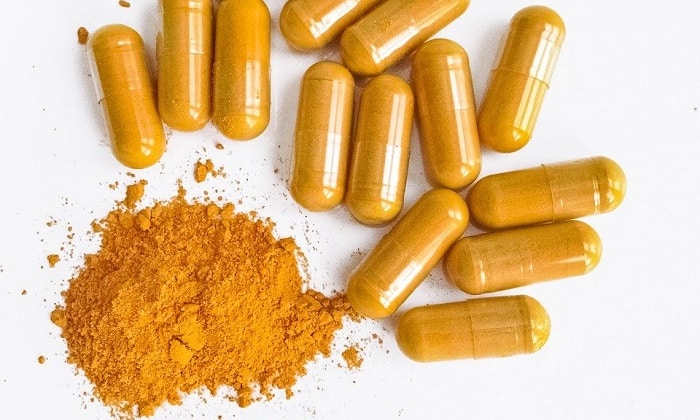
Turmeric is a spice popular in Asian cuisines that contains an anti-inflammatory compound called curcumin. Due to this compound, it’s believed that turmeric may be a fitting treatment for gout. However, research is limited.
In a 2019 animal study, mice with gout were given varying doses of oral turmeric nanoparticles for three weeks. Turmeric was shown to significantly reduce uric acid levels in the mice, especially as the dose increased.11
While we can learn from animal studies, it would be best if human trials were conducted to learn more about how turmeric may be used to treat or prevent gout.
-
Bromelain
Bromelain is a flavonoid and anti-inflammatory substance found in pineapples.
Experimental evidence has found a potential role for bromelain in gout prevention. In laboratory research, bromelain has shown an ability to reduce uric acid levels by increasing the breakdown of uric acid crystals. It’s believed that this breakdown would help decrease pain caused by gout.12
In a randomized controlled trial, bromelain plus a nutraceutical lowered uric acid levels and inflammatory markers in study participants. Other human trials have documented reductions in pain and soreness caused by gout after the consumption of bromelain-rich pineapple.12
-
Cherry extract
Cherries are rich in antioxidants (like anthocyanins) that are thought to help lower uric acid levels and reduce gout flares.
Research shows that extracts from tart cherries may be the best option for gout. For example, one study found that drinking just one ounce of tart cherry concentrate reduced uric acid levels by almost 42%. However, another study found that eating fresh cherries also had benefits for gout.13
A recent meta-analysis had similar findings. Per the review, regular cherry extract use may decrease both the incidence and severity of gout. Researchers noted, however, that studies on the effects of cherry extract on gout are limited and more research is needed.14
Other ways to manage gout
Although there is no cure for gout, there are many ways to manage the condition aside from dietary supplements.
You can take steps to treat gout flares and reduce or prevent future flares. Meeting with a healthcare provider should always be step one when it comes to finding the right treatment plan.
Typically, over-the-counter anti-inflammatory and pain-reducing medications are used during a gout flare. Certain prescription medications including corticosteroids may also be recommended.15
In between gout flares, certain lifestyle changes may decrease your chances of having another one. To manage gout symptoms and reduce the number of annual flares, it’s recommended that you follow an overall healthy diet that is low in purine-rich foods like red meat, seafood, alcohol, and soda and high in foods like fruits, vegetables, and whole grains.
When you aren’t experiencing a gout flare-up, it’s also important to manage your weight and partake in regular physical activity.15
Key takeaways
Gout is a type of inflammatory arthritis caused by high levels of uric acid in the blood. It’s characterized by painful flare-ups that typically occur on the big toe but can occur in any joint.
There are both traditional and alternative ways to treat gout, including dietary supplements. There is some evidence that certain supplements may help treat gout symptoms and flare-ups. Some supplements may also help with gout prevention.
If you’re thinking of trying a supplement for gout, talk with a healthcare provider first to learn more about dosage, safety, and the best supplement for you.
 About Brittany Lubeck
Brittany Lubeck is a registered dietitian and nutrition writer. She has a Bachelor of Science in Dietetics, a Master of Science in Clinical Nutrition, and began her career as a clinical dietitian. Brittany has always enjoyed research and loves that she can help people learn more about nutrition through her writing.
Sources:
1. Yip, K., J. Berman. “What Is Gout?” The Journal of American Medical Association 24, no. 326 (2021): 2541.
2. “Gout.” National Institutes of Health. NIAMS.NIH.gov.
3. “Gout.” Centers for Disease Control and Prevention. CDC.gov.
4. Andres, M., F. Sivera, et al. “Dietary supplements for chronic gout.” Cochrane Database of Systematic Reviews 11 (2021): CD010156.
5. Brzezinska, O., F. Styrzynski, et al. “Role of Vitamin C in Prophylaxis and Treatment of Gout – A Literature Review.” Nutrients 2, no. 13 (2021): 701.
6. Liu, X., X. Wang, L. Cui. “Association between Oral vitamin C supplementation and serum uric acid: A meta-analysis of randomized controlled trials.” Complementary Therapies in Medicine no. 60 (2021); 102761.
7. Buchbinder, R., J.P. Pardo, L. Carmona. “Dietary supplements for chronic gout.” Cochrane Database of Systematic Reviews 11 (2021): CD010156.
8. Zhang, M., Y. Zhang, et al. “Effect of Dietary and Supplemental Omega-3 Polyunsaturated Fatty Acids on Risk of Recurrent Gout Flares.” Arthritis & Rheumatology 9, no. 71 (2019): 1580-1586.
9. Zhang, Y., H. Qiu. “Folate, Vitamin B6 and Vitamin B12 Intake in Relation to Hyperuricemia.” Journal of Clinical Medicine 8, no. 7 (2018): 210.
10. Qin, X., Y. Li, et al. “Folic acid therapy reduces serum uric acid in hypertensive patients: a substudy of the China Stroke Primary Prevention Trial (CSPPT).” The American Journal of Clinical Nutrition 4, no. 105 (2017): 882-889.
11. Kiyani, M.M., M.F. Sohail, et al. “Evaluation of Turmeric Nanoparticles as Anti-Gout Agent: Modernization of a Traditional Drug.” Medicina 1, no. 55 (2019): 10.
12. Jalil, A.A.A., S.S.P.A.S. Putera, et al. “Potential Effect of Nutrition Fruits on Gout Therapy – A Review.” Asian Journal of Medicine and Health Sciences 2, no. 5 (2022): 2-24.
13. Rath, Linda. “Are Cherries a Cure for Gout?” Arthritis Foundation. Arthritis.org.
14. Chen, P., C. Liu, et al. “Effectiveness of Cherries in Reducing Uric Acid and Gout: A Systematic Review.” Evidence-Based Complementary and Alternative Medicine no. 2019 (2019): 9896757.
15. “Gout: Diagnosis, Treatment, and Steps to Take.” National Institutes of Health. NIAMS.NIH.gov.